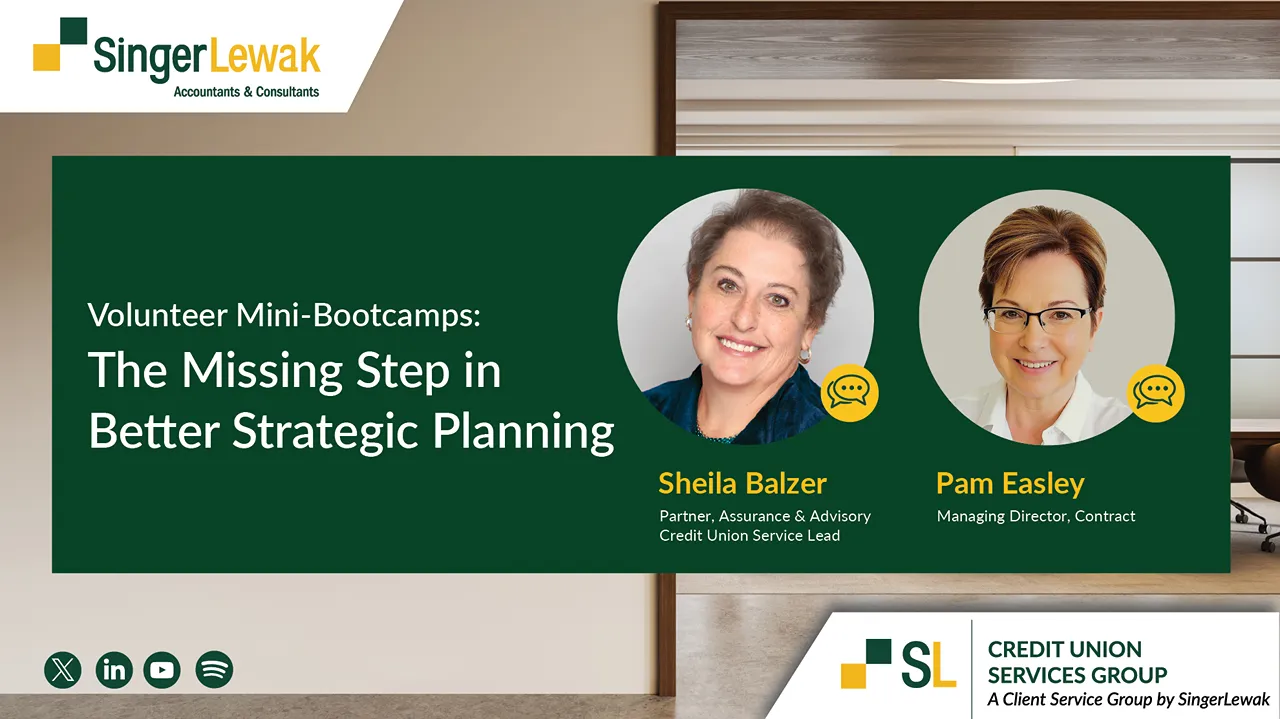
The Most Successful Strategic Planning Sessions Don’t Start When Everyone Walks Into the Session
As summer winds down, executive teams across the industry begin preparing for one of the most important exercises of the year: strategic planning.
Before strategic planning begins—before the boardroom doors open—volunteers should have the knowledge, perspective, and context needed to contribute with confidence. By preparing them in advance, credit unions can strengthen board engagement, improve strategic discussions, and build a stronger foundation for the decisions that will shape their future.
The decisions made during planning sessions shape budgets, priorities, technology investments, member services, growth initiatives, and long-term organizational direction. But while management teams spend months immersed in industry trends and operational realities, volunteer leaders often come to those discussions with varying levels of context. That’s the nature of volunteer governance.
The challenge is that today’s planning environment has become far more complex than it was even a few years ago. Economic uncertainty, regulatory changes, cybersecurity threats, artificial intelligence, evolving member expectations, and increasing competition all influence the decisions credit union leaders must make.
And that’s why more organizations are discovering the value of a simple but highly effective idea: a volunteer mini-bootcamp before strategic planning begins.
Rather than treating volunteer education as a governance requirement, these focused sessions prepare board members to participate in more informed, more productive conversations. This creates a stronger foundation for the decisions that will guide the institution’s future.
Strategic Planning Is More Complex Than Ever
Strategic planning discussions often revolve around one familiar word: growth.
Growth, however, can mean something different to different credit unions.
For one institution, growth can involve expanding membership or strengthening relationships with existing members. For another, it may mean maximizing existing technology investments, implementing AI-enabled solutions, improving digital services, or reassessing whether current products and services are still meeting members’ needs.
For some organizations, growth is defined by opportunities to expand into new fields of membership. Others will focus on improving operational efficiency or managing emerging risks.
The possibilities are broad, but successful planning depends on everyone sharing the same understanding of today’s environment.
“In the planning process, it is important to give volunteers context and the lay of the land,” says Sheila Balzer, Partner, Assurance & Advisory, and Credit Union Service Lead.
Without that shared understanding, volunteers can be asked to evaluate strategic recommendations without fully appreciating the challenges, opportunities, and market forces influencing management’s direction.
Today’s Board Members Need More Than Governance Basics
The credit union industry doesn’t stand still.
Technology evolves rapidly. Regulations change. Economic conditions shift. Fraud and cybersecurity threats grow more sophisticated. Member expectations change as consumers expect faster, more personalized digital experiences.
Volunteer board members bring valuable experience, diverse perspectives, and a genuine commitment to serving communities. That said, volunteer orientation completed years ago no longer provides the foundation needed for today’s strategic discussions.
That’s why periodic refresher training can create tremendous value.
“As an emeritus CEO of numerous credit unions and CUSOs, I know that occasional mini-bootcamps for volunteers can pay lasting dividends,” says Pam Easley, Contract Managing Director for SingerLewak.
Easley explains:
“These sessions did more than review the basics. They gave volunteers, executive teams, outside facilitators, and other stakeholders a shared foundation for productive discussions about management’s plans, member needs, and the institution’s future direction. Most importantly, they placed strategic decision-making in the right context.”
Rather than viewing volunteer education as an annual obligation, successful organizations increasingly see it as an investment in stronger governance.
What Should a Mini-Bootcamp Be Made Of?
Every credit union is different, and no two planning sessions have identical priorities. However, an effective volunteer bootcamp typically provides an overview of the issues most likely to influence strategic decision-making in the coming year.
Topics often include:
- Economic and industry trends affecting credit unions
- Emerging technologies, including artificial intelligence
- Cybersecurity and enterprise risk
- Regulatory and compliance developments
- Changing membership demographics and expectations
- Strategic priorities and organizational objectives
- The respective roles of management and volunteers during the planning process
The goal isn’t to turn volunteers into financial analysts or technology experts. The goal is to establish a common foundation of knowledge before strategic discussions begin.
Better Preparation Leads to Better Conversations
One of the greatest challenges during planning sessions isn’t disagreement. It’s differing levels of context.
Management teams work with these issues every day. Volunteers, by design, approach them from a governance perspective.
When everyone enters the planning process with a similar understanding of current conditions, discussions become more productive.
Questions become more insightful.
Ideas become more collaborative.
Decisions become more strategic.
So, instead of spending valuable retreat time explaining foundational concepts, leadership teams can focus on evaluating opportunities, exploring new ideas, and making informed decisions that support the credit union’s mission.
“It’s important that everyone be on the same page and have context,” Sheila Balzer says, adding that, “shared understanding allows volunteers to ask better questions, challenge assumptions constructively, and contribute more meaningfully to conversations that will shape the institution’s future.”
Volunteer Education Is an Investment in Better Governance
Strong governance doesn’t happen by accident.
It happens when volunteers are equipped with the knowledge, perspective, and confidence to fulfill their responsibilities effectively.
Investing a few hours in volunteer education before strategic planning can pay off throughout the year.
Board discussions become more focused, strategic decisions become more informed, and volunteers become more engaged. Management gains partners who better understand the climate in which decisions are being made.
Everyone will benefit, including the members the credit union serves.
Preparing for the Year Ahead
Credit unions inherently face different opportunities and challenges. Each organization has unique goals, member needs, competitive pressures, and strategic priorities.
That’s why volunteer education can’t follow a one-size-fits-all approach.
Regardless of where the emphasis is placed, customized preparation helps volunteers contribute with greater clarity and confidence.
As planning and budget season begins, now is the perfect time to ask: Are your volunteers ready for the conversations that will shape next year’s success?
Providing them with the right context before strategic planning begins may be one of the most valuable investments your organization can make.
SL Credit Union Services enjoys working with volunteers and executive teams to facilitate strategic planning. We can deliver governance education and provide foundational training on the issues that matter most.
Whether supporting an annual planning retreat or developing a customized volunteer mini-bootcamp, our team can help your board build the knowledge and confidence needed to govern strategically and effectively.
Talk to us today. Let’s realign your planning process for optimal results.
Contact
Sheila Balzer
Partner, Assurance & Advisory
Credit Union Service Lead
[email protected]
720.330.8160