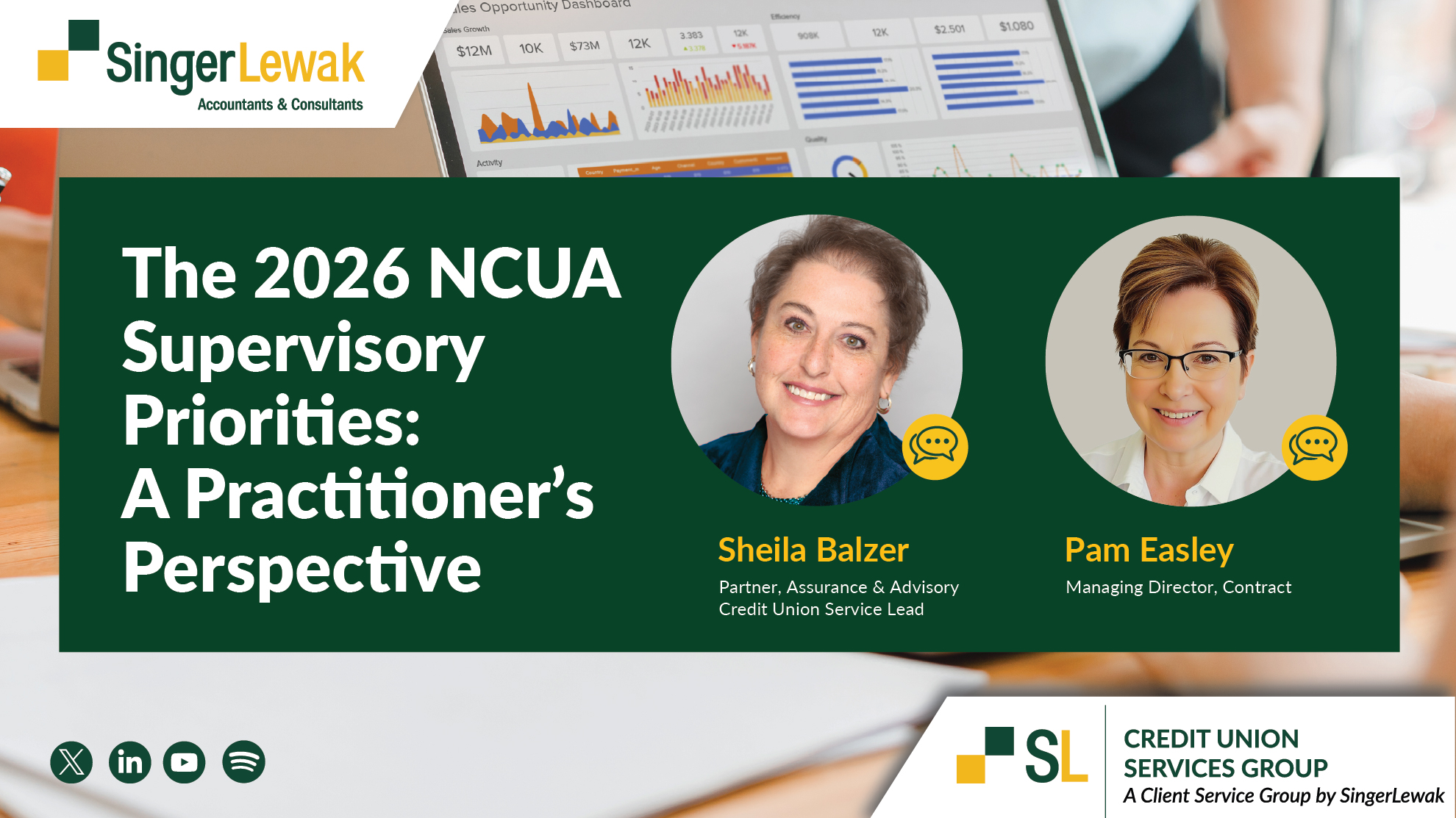
The 2026 Supervisory Priorities issued by the National Credit Union Administration (NCUA) earlier in the year, makes one message unmistakably clear: credit risk, liquidity, balance sheet management, and governance remain front and center. In its published priorities, the NCUA emphasizes that examiners will focus on “effective credit risk management,” sound allowance methodologies, and strong oversight practices to preserve safety and soundness.
In other words, regulators are not only reviewing results, they are also evaluating the strength of the systems producing those results.
The December 2025 NCUA Report “Financial Trends in Federally Insured Credit Unions” illustrated important information as well. The trendlines in the report show that rolling charge-offs over four quarters were slightly increasing. The net impact to credit unions over the rolling four quarter period had been slightly impacted by .2% as recoveries for the same rolling period improved net charge-offs slightly. This illustrated the positive impact recoveries can have toward mitigating the risk exposure. Some institutions, however, have begun experiencing localized upticks in delinquencies and slow pays within their own fields of membership. It is important to remind ourselves that figures may appear stable at a national level, but as every credit union leader knows, risk is rarely “average.” It’s local, strategic, and significantly tied to field of membership dynamics. It’s important to understand our own stories within the larger context. And, most importantly, understand what reports and what our own data really means.
Looking Beyond the Rearview Mirror
“We rely on many reports and data in our daily management. Relying on reports that tell us what’s already happened does give us context,” says Pam Easley, Managing Director of SingerLewak’s Credit Union Services Group. “But” Easley adds, “historical data alone doesn’t equip management to anticipate where pressure is likely to build next per se.”
That distinction matters. Many institutions have risk frameworks that were well designed… for previous cycles. So, naturally, the first thing that should come to mind is whether they are suitable for this one. And, a good place to start the focus today may be within the credit lending area as the Supervisory Priorities suggest.
Economic uncertainty, member stress, and evolving lending strategies require more than monitoring dashboards. They require reflection. And pertinent questions.
Is the current risk approach calibrated for today’s current realities?
Are loss mitigation, underwriting, collections, and member service teams sharing intelligence in ways that produce forward-looking insight?
Are stress testing assumptions still aligned with emerging conditions?
Are the risk governance functions and activities as effective as they could be? Or, could they benefit from a “refresh”?
Proactive — Not Reactive
Sheila Balzer, Lead Partner of SingerLewak’s Credit Union Services Group, underscores that regulators expect vigilance, particularly around supportable credit loss reserve methodologies.
She adds a practical perspective. “Regulatory expectations are rising, and appropriately so. Yet management’s responsibility goes beyond meeting exam standards. It’s about ensuring the entire risk foundation is resilient, adaptive, and integrated.”
In today’s dynamic environment, simply running last year’s playbook more carefully is not the same as being proactive.
An Opportunity to Refresh
As a former Chief Risk Officer, Easley emphasizes the importance of perspective.
“It’s an ideal time to invite an independent, high-level review of your lending risk program. Not because anything is broken, but because uncertainty demands clarity. An objective assessment can help leadership determine whether their foundation needs refinement, modernization, or recalibration, and whether communication is at the level it needs to be to manage and anticipate more effectively.”
This kind of review isn’t about second-guessing management. It is about strengthening taking a step back to assess the current credit and lending risk management approach to ensure that everyone is in synch, communication is at its highest, assumptions are being validated and understood – and that member service functions are being utilized optimally to assist. How loss mitigation, collections, member service, lending, the call center, and other operational functions are communicating and collaborating to provide forward looking insight. It’s not about discarding what works but ensuring communication with current frameworks are evolving quickly as the risks they are meant to manage.
Regulators are balancing their examinations carefully. Credit union leadership should do the same, continuing to manage daily risks, while also carving out space to reassess the foundation beneath them.
In periods of uncertainty, vigilance is essential. But perspective may be just as powerful. A refreshed risk approach is among the most valuable investments a credit union can make.
Would you like to continue the dialogue about your risk management approach?
Contact Sheila Balzer for more information.
Sheila Balzer
720.330.8160
[email protected]